The Factory · 3 min read
From Palma to Oveja Negra: Apostate's Death Mask Marks a Factory Rebirth
The Utah brand built on leaving one institution just moved its production to James Brown's Black Sheep factory in Esteli, and the first cigar out of the gate is a 5 1/2 x 48 called Death Mask.
By CigarMind Editorial ·
On October 1, boxes of a new cigar called Death Mask began shipping to retailers, and for Apostate Cigars the shipment carried more weight than a typical limited edition. It is the first Apostate cigar ever made at Fabrica Oveja Negra in Esteli, Nicaragua, the factory best known as the home of Black Label Trading Co. The cigar itself is a 5 1/2 x 48 robusto dressed in a Mexican San Andres wrapper over an Ecuadorian binder and Nicaraguan filler, carrying an MSRP of $20 per cigar and $400 per box. Only 250 boxes of twenty exist, which puts the entire production at five thousand cigars. Co-founder Brandon Oveson confirmed the ship date directly to halfwheel by email.
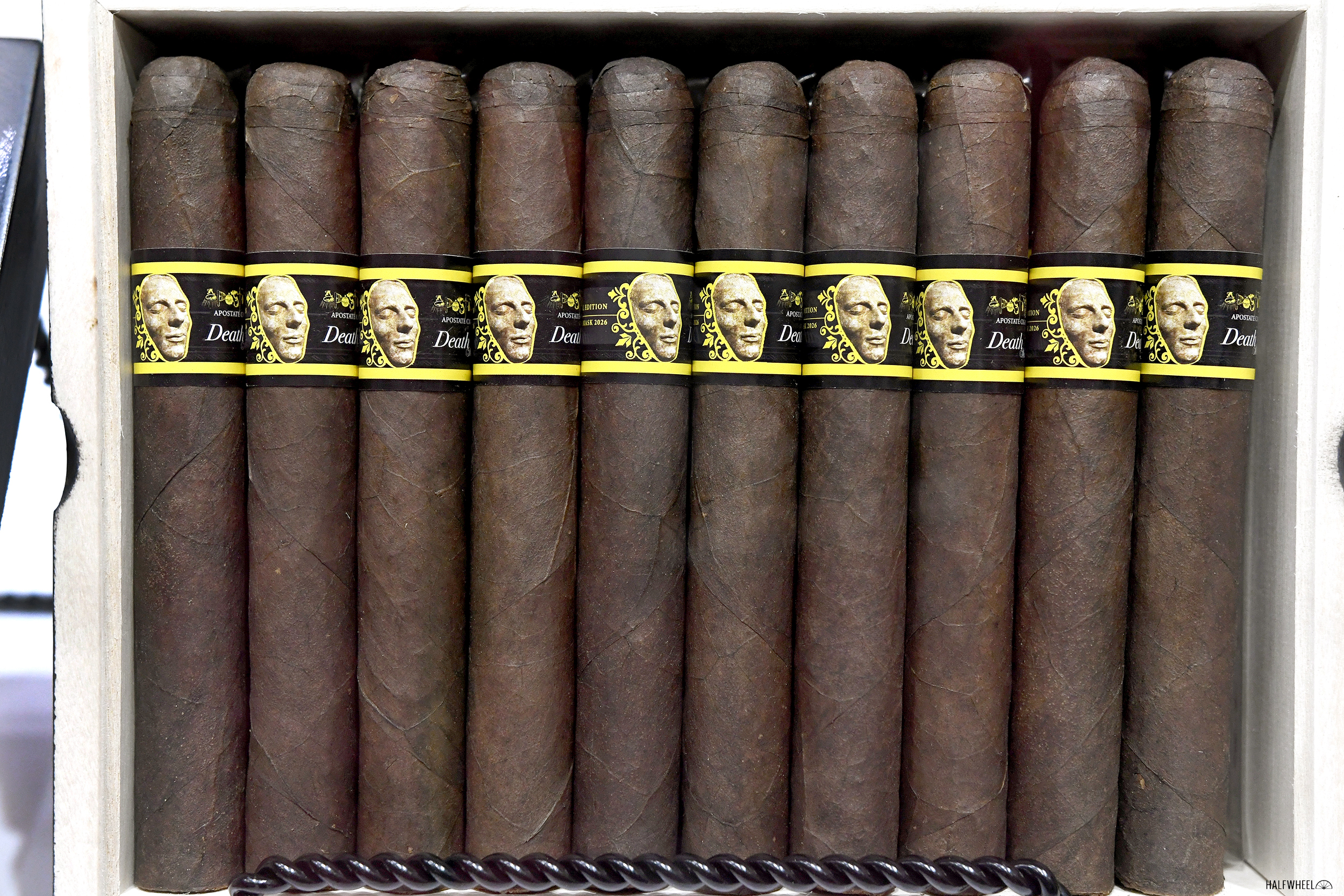
The factory matters as much as the format. James and Angela Brown opened Fabrica Oveja Negra in 2015 after deciding that outsourcing production was costing them control over their own tobacco and aging specifications, and they have lived full-time in Nicaragua ever since, running what has become one of the most respected small-batch operations in the country. Apostate's core lines had previously been blended under the supervision of Jochy Blanco at Tabacalera Palma in the Dominican Republic, a fine home by any measure. Moving to Oveja Negra is not an escape from mediocrity. It is a deliberate step into a factory whose entire identity is built on small runs and hands-on ownership, a posture that mirrors Apostate's own.
The road to Esteli began as a paperwork arrangement. Just after the 2025 PCA Convention and Trade Show, Oveja Negra Brands announced it would take over sales, marketing, and distribution for Apostate, with the agreement taking effect at the start of June 2025. Oveja Negra Brands unifies Black Label Trading Co., Black Works Studio, and Emilio Cigars under one sales team and one distributor, the L.J. Zucca company, a tobacco distributor since 1947. Apostate became the fourth brand at that table. Distribution agreements are common in this industry and usually stay exactly that, but this one quietly became a production deal, which is the far more interesting outcome.
Context makes the move legible. Apostate was founded in 2020 by Oveson and Kendrick Woolstenhulme, who grew up in Utah as active members of the Church of Jesus Christ of Latter-day Saints and have since left the faith. In Mormon culture, apostate is the term for someone who departs the church, and smoking a cigar is about as open an act of rebellion as that culture allows, since tobacco is forbidden by its teachings. The founders took the label as their brand name and built a line in which every cigar name references the religion they left. That kind of identity demands a factory partner willing to treat small batches as the point rather than the problem.
The name of this cigar is the sharpest reference the company has made yet. Joseph Smith and his brother Hyrum both had death masks, plaster impressions of the face taken after death, made shortly after they were killed in 1844, and those casts remain artifacts of the faith's founding story. Naming a limited San Andres robusto after them is the kind of provocation that could feel like a gimmick in lesser hands. Paired with a real factory move and a five thousand cigar run, it instead reads as a brand doubling down on its own story at the moment it gains new hands to tell it.
Sources
- halfwheel.com
- ovejanegracigars.com
- smokingpipes.com
- churchofjesuschrist.org
Makers in this read
More The Factory